Good bedroom lighting does more than help you find the light switch at 3 a.m. It sets the mood, supports your routines, and makes the space feel finished. Too many bedrooms rely on a single overhead fixture and a couple of table lamps, functional, sure, but far from optimal. The right lighting scheme layers ambient, task, and accent sources to create a flexible, comfortable environment. Whether you’re updating a master suite or working with a small guest room, understanding how different fixtures and controls work together is the foundation of a lighting plan that actually performs.
Table of Contents
ToggleKey Takeaways
- Layer your bedroom lighting with ambient, task, and accent sources to create flexibility and comfort—avoid relying on a single overhead fixture.
- Use warm white bulbs (2700K to 3000K) with dimmer switches for ambient lighting to promote relaxation and control mood throughout the evening.
- Install task lighting like bedside sconces 15–18 inches above the mattress and desk lamps with at least 300–500 lumens for reading and getting ready.
- Smart dimmer switches and tunable white bulbs enable circadian-aligned lighting by shifting from cooler tones in the morning to warmer tones at night for better sleep.
- Accent lighting with LED strips, picture lights, or wall-washing techniques highlights architectural features and adds intentional design depth to your bedroom.
Layering Your Bedroom Lighting for Maximum Comfort
Layering means using three distinct types of lighting, ambient, task, and accent, in combination. Most bedrooms fail because they rely on one source to do everything. A single ceiling fixture might provide enough lumens to navigate, but it won’t help you read in bed or showcase architectural details.
Start with ambient lighting as your base layer. This is general illumination from ceiling fixtures, recessed cans, or wall-mounted sconces. Next, add task lighting where you need focused light: bedside reading lamps, vanity lights, or a desk lamp if the bedroom doubles as a workspace. Finally, accent lighting highlights features like artwork, textured walls, or architectural niches.
The goal is flexibility. You don’t need all three layers running at once. A dimmer-controlled ceiling fixture plus bedside lamps gives you options: bright light for cleaning or folding laundry, softer light for winding down, and targeted light for reading. Many homeowners overlook the importance of home up lighting techniques, which can add dramatic vertical illumination to corners or behind furniture.
Wiring for layered lighting often requires planning during construction or renovation. If you’re working with existing electrical boxes, battery-powered or plug-in fixtures can fill gaps without opening walls. Consider load-bearing and code requirements if you’re adding new junction boxes in a ceiling, most jurisdictions require electrical work to meet NEC (National Electrical Code) standards, and some installations need a licensed electrician.
Ambient Lighting Solutions for a Relaxing Atmosphere
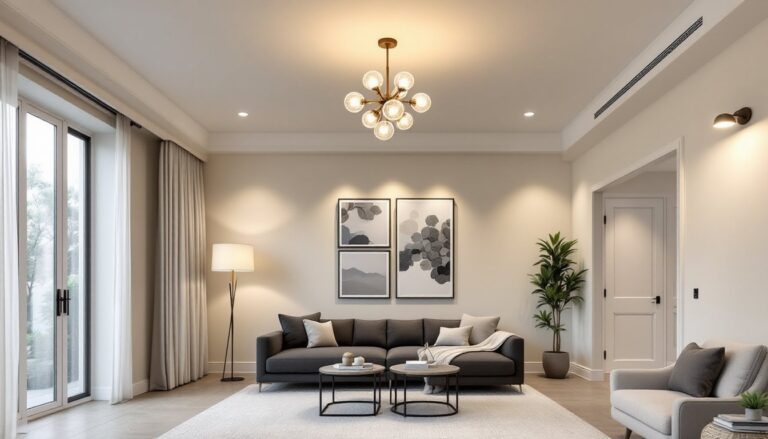
Ambient lighting sets the overall tone. It’s the layer you turn on when you walk into the room, and it should distribute light evenly without harsh shadows or glare. Ceiling-mounted fixtures, chandeliers, flush-mounts, and semi-flush-mounts are common choices. For bedrooms with low ceilings (under 8 feet), a flush-mount fixture keeps clearance while providing broad coverage.
If you prefer a minimalist look, recessed lighting (also called can lights) works well. Standard 6-inch recessed cans are the most common: for an 8-foot ceiling, space them roughly 4 feet apart to avoid dark spots. Use warm white bulbs (2700K to 3000K color temperature) instead of daylight bulbs, warmer tones promote relaxation and are easier on the eyes before bed.
Dimmer switches are non-negotiable for ambient fixtures. A standard rotary or slide dimmer costs $15 to $30 and installs in place of a regular switch (confirm bulb compatibility, not all LEDs dim smoothly). For larger bedrooms or open-plan suites, consider zoning: wire different areas (sleeping zone vs. dressing area) to separate switches or dimmers.
Safety note: Always turn off power at the breaker before installing or replacing light fixtures. Use a non-contact voltage tester to confirm the circuit is dead.
Ceiling Fixtures and Recessed Lighting Options
Ceiling fixtures come in three main mounting styles: flush, semi-flush, and pendant. Flush-mounts sit tight against the ceiling and work in rooms with 7- to 8-foot ceilings. Semi-flush-mounts hang down 4 to 12 inches, adding visual interest without overwhelming the space. Pendant lights (single or clustered) work best in rooms with ceilings 9 feet or higher: hang the bottom of the shade 7 feet above the floor to avoid head clearance issues.
Recessed lighting requires access above the ceiling (attic space or a crawlspace). IC-rated housings are required if insulation contacts the fixture: non-IC cans need 3 inches of clearance. Retrofit LED kits make it easy to upgrade old incandescent cans, they snap into the existing housing and often include integrated dimmers. When visiting a local lighting retailer, compare lumens rather than wattage: a 10-watt LED can produce the same 800 lumens as a 60-watt incandescent.
For sloped or vaulted ceilings, use adjustable recessed housings rated for the angle. Standard flat cans won’t sit flush and can create code violations or fire hazards.
Task Lighting Ideas for Reading and Getting Ready
Task lighting puts focused illumination exactly where you need it. Bedside reading is the most obvious use case, but task lighting also supports makeup application, getting dressed, or working at a desk.
Bedside lamps are the workhorse of bedroom task lighting. Swing-arm wall sconces save nightstand space and direct light precisely where you need it. Mount the sconce 15 to 18 inches above the mattress top, with the arm extending over the bed edge. If you’re installing new sconces, run the wiring to a wall switch or use plug-in models with in-line switches.
Table lamps offer more flexibility but take up surface area. Choose lamps with three-way bulbs (50/100/150 watts equivalent) or built-in dimmers to adjust brightness. Shade material matters: opaque shades focus light downward, while linen or fabric shades diffuse it more broadly. For reading, you want at least 300 to 500 lumens at the book surface, too dim, and you’ll strain your eyes.
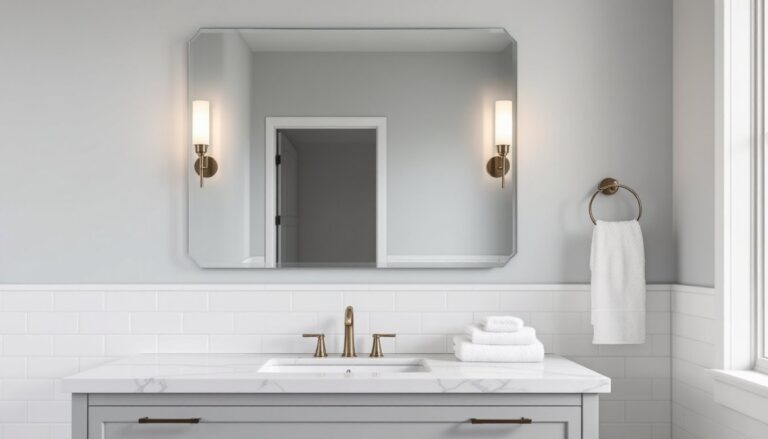
Vanity lighting belongs in the task category if your bedroom includes a dressing area or makeup station. Vertical sconces mounted on either side of a mirror provide even, shadow-free light for grooming. Hollywood-style bulb strips are trending but can produce harsh light: opt for frosted bulbs or diffusers. Position sconces at face height, roughly 60 to 65 inches from the floor.
If the bedroom doubles as a home office, overhead task lighting isn’t enough. A desk lamp with an adjustable arm (LED swing-arm models work well) puts light on your keyboard and paperwork without glare on the monitor. For focused desk work, similar principles apply to ceiling lighting for home offices.
Pro tip: Use bulbs with a CRI (Color Rendering Index) of 90 or higher for task lighting. Higher CRI means colors look more accurate, critical for choosing clothes or applying makeup.
Accent Lighting to Highlight Your Bedroom’s Best Features
Accent lighting adds depth and visual interest by highlighting architectural features, artwork, or decorative elements. It’s the layer that makes a room feel intentionally designed rather than just functional.
Picture lights are a classic accent choice. Battery-powered LED picture lights install in minutes and illuminate framed art or photos without running wires. For gallery-style lighting, use track lighting or adjustable recessed cans with narrow beam angles (25 to 40 degrees) to spotlight specific pieces.
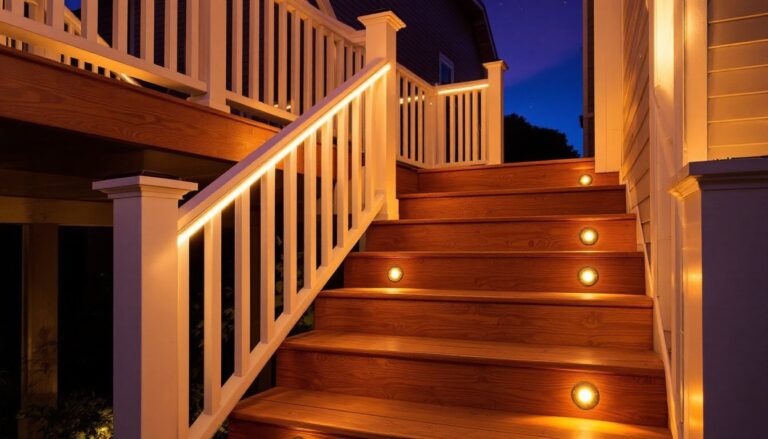
Cove lighting (indirect lighting mounted in a ledge or recess) casts a soft glow upward or downward. LED strip lights are the go-to for cove installations: they’re flexible, low-profile, and available in various color temperatures. Stick them along the top of a headboard wall or inside a tray ceiling for ambient uplighting. Most LED strips run on 12V or 24V DC power and require a driver (transformer): make sure the driver is rated for the total strip length you’re installing.
Backlighting a headboard or floating shelves creates a subtle halo effect. Mount LED strips behind the furniture, leaving a 2- to 3-inch gap between the wall and the object. Use aluminum channels to house the strips, bare LED tape looks unfinished and can create hotspots.
For textured walls (brick, stone, shiplap), wall-washing with recessed cans or linear fixtures brings out the material’s depth. Position fixtures 12 to 18 inches from the wall and aim them at a shallow angle.
Accent lighting typically uses lower wattage than ambient or task layers. Aim for contrast rather than brightness, 100 to 200 lumens per accent fixture is often sufficient. Layered accent lighting principles are well-documented in design guides for stylish spaces, where unique pendants and sconces create focal points.
Smart Lighting Controls and Dimming Solutions
Smart controls turn a good lighting plan into a great one. They let you adjust brightness, color temperature, and even automate schedules from a phone or voice assistant.
Dimmer switches are the entry point. Standard rotary or slide dimmers work with most LED bulbs, but confirm compatibility, some LEDs flicker or buzz on incompatible dimmers. Electronic low-voltage (ELV) dimmers handle LED and CFL loads better than older magnetic dimmers designed for incandescent bulbs. Expect to spend $20 to $50 per dimmer, plus installation labor if you’re hiring an electrician.
For whole-room control, smart dimmer switches like Lutron Caséta or Leviton Decora integrate with home automation systems. They replace standard switches and connect via Wi-Fi or a hub. You can set scenes (“Reading,” “Movie Night,” “Sleep”) that adjust multiple fixtures simultaneously. Installation is the same as a standard dimmer, but you’ll need a neutral wire in the box, older homes sometimes lack neutrals, which limits smart switch compatibility.
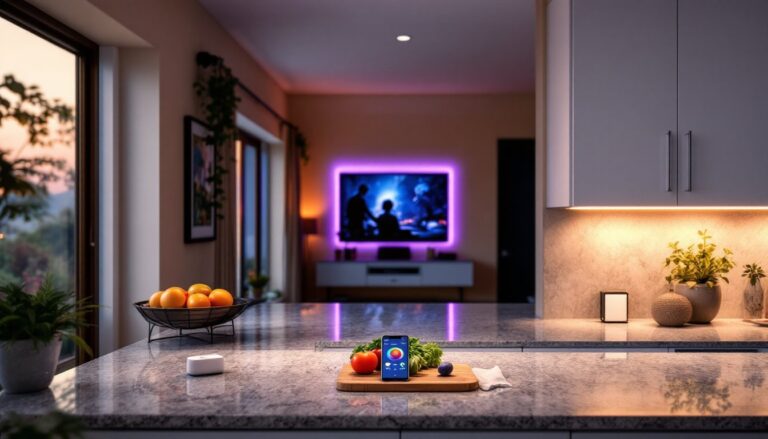
Smart bulbs (Philips Hue, LIFX, Wyze) offer another route. They screw into existing sockets and connect to Wi-Fi or Bluetooth. You control them via app, and many support tunable white (adjusting color temperature from warm to cool) or full RGB color. The downside: they’re more expensive per bulb ($10 to $50 each) and require the switch to stay on, if someone flips the wall switch off, the smart features won’t work.
For bedrooms, tunable white bulbs are worth considering. Studies on circadian lighting suggest cooler tones (4000K+) in the morning help you wake up, while warmer tones (2200K to 2700K) in the evening support melatonin production and better sleep. Smart systems let you automate this shift throughout the day.
Motion sensors and occupancy sensors can automate closet or bathroom lighting but are less common in main bedroom areas (nobody wants the lights flicking on during a middle-of-the-night trip to the bathroom). For that scenario, battery-powered motion-activated nightlights or under-bed LED strips work better.
Voice control via Alexa, Google Assistant, or Siri adds convenience, especially useful when your hands are full or you’re already in bed. Most smart switches and bulbs integrate easily, though you’ll need a compatible hub or Wi-Fi network.
Safety reminder: Always follow the manufacturer’s wiring diagrams when installing smart switches. Incorrect wiring can damage the device or create fire hazards. If your home’s electrical system uses knob-and-tube wiring or lacks a ground, consult a licensed electrician before installing smart controls.
For more inspiration on integrating modern lighting controls into functional spaces, many homeowners explore ambient lighting techniques that blend smart technology with layered design.
Conclusion
A well-lit bedroom doesn’t happen by accident. It’s the result of layering ambient, task, and accent sources: choosing the right fixtures for the space: and adding controls that let you fine-tune brightness and mood. Start with a plan that accounts for how you actually use the room, reading, getting ready, relaxing, and build from there. Don’t skip the dimmer switches, and don’t underestimate the value of warm color temperatures. With thoughtful fixture placement and a bit of wiring know-how, you’ll create a bedroom that works as hard as you do, whether you’re waking up or winding down.