Pendant lights can make or break a kitchen’s functionality and visual appeal. They’re not just overhead fixtures, they define task zones, anchor design schemes, and determine whether you’re chopping onions in shadow or perfectly lit work areas. Unlike recessed cans that disappear into ceilings or flush-mounts that blend into the background, pendants command attention while doing real work. They bridge the gap between ambient lighting and focused task illumination, especially over islands and countertops where most kitchen activity happens. Getting pendant lighting right means understanding scale, placement, wiring limitations, and how these fixtures interact with existing lighting layers.
Table of Contents
ToggleKey Takeaways
- Pendant lighting kitchen fixtures deliver concentrated task light over islands and countertops, reducing shadows and eye strain while defining visual zones in open-concept layouts.
- The ideal pendant size follows a formula: add room length and width in feet, then convert to inches for diameter; maintain 30–36 inches of clearance between pendant bottom and countertop for safe, functional task lighting.
- Pendant lights work best as part of a layered lighting strategy that combines ambient light (recessed cans), task light (pendants), under-cabinet illumination, and accent lighting to prevent over-lit or poorly lit spaces.
- Match pendant finishes to existing hardware, cabinet pulls, and faucets to maintain visual coherence, and avoid mixing more than one warm-toned and one cool-toned metal to prevent a chaotic appearance.
- Position multiple pendants evenly over islands—typically two for 4-foot islands, three for 6-foot islands—spaced 24–30 inches apart center to center, and keep outer fixtures at least 6 inches from island ends.
- Install compatible LED dimmers with pendant lighting to transition from bright task lighting during meal prep to softer ambient light during dining, enhancing both functionality and energy efficiency.
Why Pendant Lights Are Perfect for Kitchens
Pendants excel in kitchens because they deliver concentrated light exactly where it’s needed. A standard recessed can spreads illumination across a wide area, great for general ambiance, but lousy for precision tasks like dicing vegetables or reading recipes. Pendants drop light directly onto work surfaces, reducing shadows and eye strain.
They also define space in open-concept layouts. When your kitchen flows into a dining or living area, pendant fixtures over an island create a visual boundary without walls. This matters in homes where the kitchen isn’t a separate room but part of a larger zone.
From a design standpoint, pendants add vertical interest. Kitchens are dominated by horizontal lines, countertops, cabinets, backsplashes, so fixtures that hang down break up that monotony. They’re one of the few elements in a kitchen that occupy the mid-height visual zone between counters and ceiling.
Pendants also offer flexibility that fixed fixtures can’t match. Many use standard medium-base (E26) sockets, so you can swap bulbs to adjust color temperature and brightness without rewiring. Dimmable LED bulbs let you transition from bright task lighting during meal prep to softer ambient light during dinner.
Finally, installation is often simpler than people expect. If there’s already a ceiling junction box, common over islands in newer construction, swapping a flush-mount for a pendant is a straightforward project. Even adding new boxes is manageable if you have attic access above the kitchen.
Choosing the Right Pendant Light Style for Your Kitchen
Style choice depends on three factors: the kitchen’s existing design language, the fixture’s intended function, and how much visual weight you want hanging overhead.
Glass pendants are versatile and range from clear schoolhouse globes to seeded or frosted shades. Clear glass shows off decorative filament bulbs but offers little glare control. Frosted or seeded glass diffuses light, reducing harsh shadows while still looking clean and modern. These work well in transitional kitchens that blend traditional and contemporary elements.
Metal shades, often powder-coated aluminum or steel, deliver an industrial or farmhouse vibe depending on finish. Matte black or oil-rubbed bronze skew industrial: brushed nickel or aged brass lean farmhouse. Metal shades direct light downward aggressively, making them ideal for task-heavy zones. They’re also durable and easy to clean, a real advantage near stoves where grease becomes airborne.
Drum pendants with fabric or mesh shades soften light and add texture but require more maintenance. Fabric collects dust and grease over time. Reserve these for dining areas or breakfast nooks rather than directly above cooktops.
Mini pendants (shades under 10 inches wide) work in clusters over islands. Large statement pendants (12+ inches) often fly solo or in pairs. A single oversized fixture can anchor a small island, while three or more mini pendants suit longer countertops.
Match finishes to existing hardware, cabinet pulls, faucet, appliances, to maintain visual coherence. Mixing metals can work, but it requires intentionality. One warm-toned metal (brass, copper) and one cool-toned (chrome, nickel) is usually the limit before things look chaotic.
How to Determine the Perfect Size and Scale
Pendant size affects both function and proportion. Too small, and they look like afterthoughts floating in space. Too large, and they overwhelm the room or create head-knocking hazards.
For single pendants over a small island or table, add the room’s length and width in feet, then convert that sum to inches for the fixture’s diameter. A 12′ × 15′ kitchen suggests a pendant around 27 inches wide. This formula works for rooms, not islands, scale the fixture to the space it illuminates, not the entire kitchen.
Over islands, plan 30–36 inches of clearance between pendant bottom and countertop. This gives enough task light without forcing tall people to duck. For an 8-foot ceiling with standard 36-inch counter height, you’re working with roughly 60 inches of vertical space. Subtract the 30-inch clearance, and you’ve got 30 inches for the pendant body plus hanging rod or chain.
When using multiple pendants, the combined visual weight matters more than individual size. Three 8-inch mini pendants create similar impact to a single 20-inch fixture. Space multiples evenly, typically 24–30 inches apart, center to center, and keep the outer fixtures at least 6 inches from the island’s ends to avoid an unbalanced look.
Consider the pendant’s shape, too. A wide, shallow drum pendant feels less imposing than a tall, narrow cage fixture of the same diameter. Slender vertical designs work in kitchens with higher ceilings (9+ feet) where you have room to showcase the fixture’s full height. Homeowners exploring ambient lighting layers often find pendants work best when their scale complements other fixtures in the room.
Best Placement Options for Kitchen Pendant Lighting
Placement determines whether pendants actually improve function or just hang there looking decorative. The goal is to light work zones without creating shadows or visual clutter.
Over Kitchen Islands and Countertops
This is the most common, and most effective, placement. Islands are task-central in modern kitchens, handling everything from meal prep to assignments to casual dining. Pendant lights provide direct downlight onto these surfaces, supplementing the general ambient light from recessed cans or ceiling fixtures in other rooms.
For standard 4-foot islands, two pendants work well. For 6-foot islands, three is the sweet spot. Longer islands (8+ feet) can handle four or more mini pendants, though at that point, consider whether a single linear fixture might simplify installation and visual impact.
Center pendants along the island’s length, not the kitchen’s overall width. If your island is offset to one side of the room, the pendants follow the island, not the room’s centerline. This sounds obvious, but it’s a common layout mistake.
Avoid placing pendants directly above sinks unless the fixture is specifically rated for damp locations and you’re certain it won’t interfere with the faucet’s swing radius. Water splashing onto hot bulbs or onto non-sealed fixtures creates both safety and longevity issues.
Pendants also work over breakfast nooks or peninsula counters where you need task light but don’t want the visual weight of a full chandelier. In these spots, treat the fixture like an island pendant: maintain that 30–36 inch clearance and scale appropriately to the surface below.
Installation Tips and Height Guidelines
Most pendant installations are within reach of confident DIYers, but electrical work always demands respect. Turn off power at the breaker, not just the switch, and verify it’s dead with a non-contact voltage tester before touching any wires.
If you’re replacing an existing fixture, the hard part’s done, there’s already a ceiling junction box. Remove the old fixture, noting wire connections (usually black to black, white to white, bare copper ground to green or bare). Match those connections with the new pendant’s wires, secure them with wire nuts, and tuck everything neatly into the box before attaching the canopy.
Most pendants ship with adjustable hanging rods or chains. Measure twice before cutting. You want the bottom of the shade 30–36 inches above the counter, closer to 30 inches for task-heavy zones, up to 36 inches if people will be moving around underneath. For 8-foot ceilings, that typically means a total drop of 24–30 inches from ceiling to shade bottom.
If you’re adding new boxes where none exist, you’ll either fish wire through the ceiling (easier if you have attic access) or surface-mount raceways (less attractive but code-compliant if done correctly). This is permit territory in most jurisdictions, electrical work must meet NEC standards, and inspectors want to see junction boxes properly secured to framing, not just hanging on drywall.
For kitchens with minimal attic access or complex joist layouts, call a licensed electrician. The cost of doing it right, $150–$300 per new box in most markets, beats the risk of improper wiring.
Dimmer switches significantly improve pendant functionality. Install a compatible LED dimmer if you’re using LED bulbs: older incandescent dimmers cause LEDs to flicker or hum. Lutron and Leviton both make reliable models rated for LED loads. Many lighting fixtures designed for residential spaces now include dimming recommendations in their installation manuals.
Mixing Pendant Lights with Other Kitchen Lighting
Pendants shouldn’t work alone. Kitchens need layered lighting, ambient, task, and accent, to function well at different times of day.
Ambient lighting comes from recessed cans, flush-mounts, or track lighting that washes the room in general illumination. In most kitchens, aim for roughly 50 lumens per square foot of ambient light. A 150-square-foot kitchen needs around 7,500 lumens total, which might come from six to eight recessed LED cans (800–1,000 lumens each).
Pendants provide task lighting over specific work zones. They don’t need to light the entire kitchen, that’s the ambient layer’s job. Instead, they concentrate light where you’re actually working. This division of labor prevents the harsh, over-lit feel of kitchens with nothing but bright recessed cans.
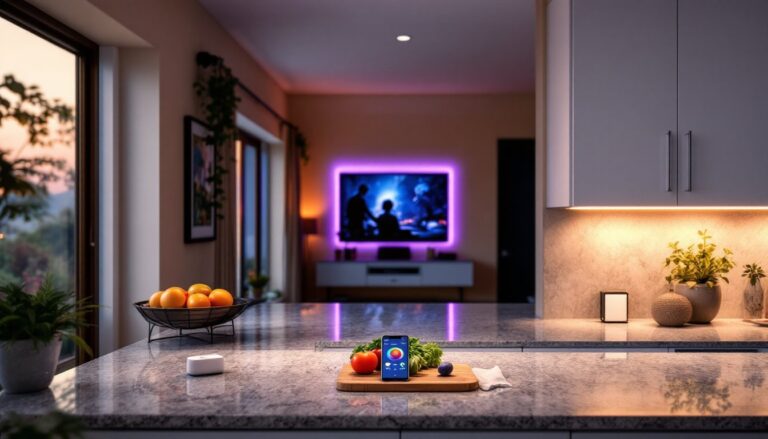
Under-cabinet lighting complements pendants by eliminating shadows on countertops created by wall cabinets. LED tape lights or puck lights mounted to the underside of cabinets provide direct, shadow-free task light for countertop work. This setup works especially well when paired with dimmed pendants during evening cooking, creating a softer overall mood.
Accent lighting highlights architectural features, open shelving, or glass-front cabinets. Small puck lights or low-voltage strip LEDs can spotlight decorative items without contributing much to functional illumination. Design enthusiasts comparing pendant options for kitchen islands often discover that accent layers make the overall scheme feel more intentional.
Control these layers separately with individual switches or a smart lighting system. You don’t always need every light on full blast. Morning coffee might just need under-cabinet lights: dinner prep uses pendants plus ambient: late-night snacks could run on dimmed pendants alone. Separate control prevents over-lighting and cuts energy use.
Color temperature consistency matters, too. Mixing warm white (2700K–3000K) and cool white (4000K+) bulbs creates a disjointed feel. Stick with one color range across all kitchen fixtures, or at least within visible zones. Warm white suits most residential kitchens: cool white works in ultra-modern or commercial-style spaces. Several retailers, including major home improvement stores, offer extensive lighting fixture selections that specify color temperature ranges for each product.
When planning task zones, remember that pendants over islands often sit in sightlines from adjacent rooms. Choose fixtures that look good from all angles, many design-focused platforms emphasize that kitchen lighting should function as both utility and decor. Similarly, spaces like dining areas benefit from coordinating fixtures that echo the kitchen’s pendant style without exact duplication.
Finally, consider how natural light shifts throughout the day. Pendants that seem perfectly bright at dusk might look harsh in morning sunlight. Dimmers and layered control let you adapt to changing conditions. For those exploring broader lighting strategies across multiple rooms, this adaptability becomes even more valuable.
Kitchens with pendant lighting rarely feel complete without these supporting layers. Budget for the full lighting plan, not just the statement fixtures. The pendants get attention, but the recessed cans, under-cabinet strips, and accent lights do the heavy lifting. Visual galleries like those on Homify’s pendant light showcase often reveal how professionals combine multiple light sources to achieve balanced, functional kitchens that work as hard as they look.