Dining room lighting has evolved far beyond the single overhead fixture your parents installed in 1995. Today’s trends blend practical illumination with design-forward aesthetics, creating spaces that work as hard at 7 a.m. breakfast as they do during dinner parties. Whether you’re planning a full renovation or just swapping out a dated fixture, 2026’s lighting trends offer options for every skill level and budget. Some require only a screwdriver and an afternoon: others might need an electrician and a permit. Here’s what’s actually making waves in dining rooms this year.
Table of Contents
ToggleKey Takeaways
- Modern dining room lighting trends emphasize layered illumination with ambient, task, and accent sources rather than relying on a single overhead fixture.
- Statement chandeliers are making a bold return in 2026, with oversized sculptural pieces measuring 36 to 48 inches in diameter replacing dated crystal designs.
- Warm-spectrum LED bulbs between 2700K and 3000K now dominate dining room installations, creating flattering light that showcases food and skin tones better than cool-white alternatives.
- Natural materials like rattan, woven seagrass, and ceramic fixtures add textural warmth to dining spaces, but require proper ceiling mounting and dry environments away from kitchen moisture.
- Linear and geometric fixtures provide visual balance over rectangular tables, with smart lighting controls allowing homeowners to program custom scenes like ‘Dinner Party’ or ‘Mood’ lighting from their phones.
- Most dining room lighting updates require only basic electrical knowledge and can be completed in an afternoon, though circuit work and heavy installations (over 50 pounds) should be handled by licensed electricians.
Statement Chandeliers Make a Bold Return
Oversized chandeliers are reclaiming their spot above dining tables, but not the crystal-dripping versions from decades past. Current statement pieces lean toward sculptural metalwork, oversized drum shades, and fixtures that span 36 to 48 inches in diameter for standard 8-foot ceilings.
When sizing a chandelier, the general rule still holds: add the room’s length and width in feet, then convert to inches for fixture diameter. A 12×14-foot dining room works well with a 26-inch fixture, though going larger creates drama if ceiling height allows. For tables, leave at least 30 inches of clearance between the fixture bottom and tabletop, more if anyone in the household is over six feet tall.
Installation requires turning off power at the breaker, not just the wall switch. If the existing junction box isn’t rated for the new fixture’s weight (check the label inside the canopy), you’ll need to swap it for a fan-rated pancake box or similar heavy-duty option. Chandeliers over 50 pounds often require additional ceiling blocking between joists. This isn’t cosmetic work, improper mounting can drop a fixture straight through drywall.
Many homeowners find inspiration in lighting fixture galleries showcasing modern interpretations of classic shapes. If you’re sourcing locally, a Home Depot Lighting Department carries multiple statement options with same-day availability.
Layered Lighting for Flexibility and Ambiance
Single-source overhead lighting belongs in storage units, not dining rooms. Layered lighting combines three types: ambient (general overhead), task (focused light for serving or reading), and accent (highlighting artwork or architectural features).
Start with your primary fixture on a dimmer circuit. Add wall sconces flanking a buffet or sideboard, these should sit 60 to 66 inches from the floor to avoid glare at seated eye level. Recessed cans work for ambient fill but avoid placing them directly over the table where they create harsh shadows on faces.
Wiring for layered lighting gets complicated fast. Each layer needs its own switch, and running new circuits through finished walls often means cutting access holes you’ll patch and paint later. If the dining room shares a wall with a basement or attic, fish new wire yourself: otherwise, hire a licensed electrician. Permit requirements vary by jurisdiction, but most municipalities require one for new circuits.
Under-cabinet or toe-kick lighting in an adjacent built-in adds subtle dimension. Low-voltage LED strips pull minimal power and install with adhesive backing and a plug-in transformer, no hardwiring needed. Just keep transformers accessible per NEC code: burying them behind permanent cabinetry fails inspection.
Warm, Dimmable LEDs Replace Cool Whites
The era of blue-toned LED lighting is over. Warm-spectrum LEDs between 2700K and 3000K now dominate residential installations, mimicking the soft glow of incandescent bulbs without the heat and energy waste.
Color temperature matters more in dining rooms than almost anywhere else. Cool whites above 4000K make food look unappetizing and cast unflattering skin tones. Test bulbs before committing, most hardware stores accept returns on opened packages if the color doesn’t work.
Dimmer compatibility is non-negotiable. Not all LED bulbs dim smoothly: some flicker or buzz at low levels. Look for bulbs specifically labeled “dimmable” and pair them with an LED-compatible dimmer switch, not the old rotary dial designed for incandescents. Lutron and Leviton both make reliable options in the $20 to $40 range.
Swapping a standard switch for a dimmer takes about 15 minutes if the box already has a neutral wire (white). Older homes sometimes lack neutrals in switch boxes, which complicates smart dimmer installation. You’ll see a bundle of white wires capped together in the back of the box if a neutral is present. If not, you’ll need to pull one from the fixture box or install a different dimmer type. Many design-focused sites like MyDomaine highlight how proper lighting temperature transforms the entire mood of a space.
Natural Materials and Organic Shapes
Rattan, woven seagrass, wood beads, and sculptural ceramic fixtures are showing up in dining rooms across style categories, not just coastal or boho spaces. These materials soften the hard edges of metal and glass while adding textural interest that photographs well and feels warm in person.
Natural-material fixtures work best in rooms with 8- to 10-foot ceilings where the texture remains visible. Hang them too high, and the detail disappears. Too low, and they visually clutter the space.
Weight becomes an issue with woven fixtures. A large rattan pendant can weigh 15 to 20 pounds even though looking lightweight. Confirm your junction box is rated appropriately, and use the included hardware, those cheap drywall anchors won’t cut it. For plaster ceilings common in older homes, toggle bolts rated for 50+ pounds provide secure mounting.
Wood and natural fiber fixtures need dry environments. Moisture from adjacent kitchens can warp or mildew untreated materials over time. If your dining room opens directly to a kitchen without a vent hood, consider sealed or treated finishes.
Sourcing these fixtures locally can be hit-or-miss. If shopping at a Home Depot Lighting location, call ahead to check stock, natural material fixtures often aren’t floor models.
Linear and Geometric Fixtures Gain Popularity
Linear pendants and geometric cage fixtures suit contemporary and transitional dining rooms, especially those with rectangular or oval tables. These fixtures create visual balance that round chandeliers can’t match over long tables.
A linear fixture should span roughly one-half to two-thirds the table length. For a 72-inch table, look for fixtures between 36 and 48 inches long. Geometric shapes, hexagons, pyramids, interlocking rings, add architectural interest without overwhelming the room.
Mounting linear fixtures requires centering them both lengthwise and widthwise over the table, which doesn’t always align with the existing junction box. If the box is off-center by more than a few inches, you have two options: move the table (easiest), or relocate the junction box (requires cutting ceiling drywall, running new wire, patching, and painting).
Some linear fixtures use multiple bulbs in series, six or eight E26 sockets isn’t uncommon. That’s fine electrically if the circuit can handle the load, but switching to LED bulbs keeps wattage manageable. Eight 60-watt incandescents would pull 480 watts: eight 8-watt LEDs pull only 64 watts while producing similar lumens.
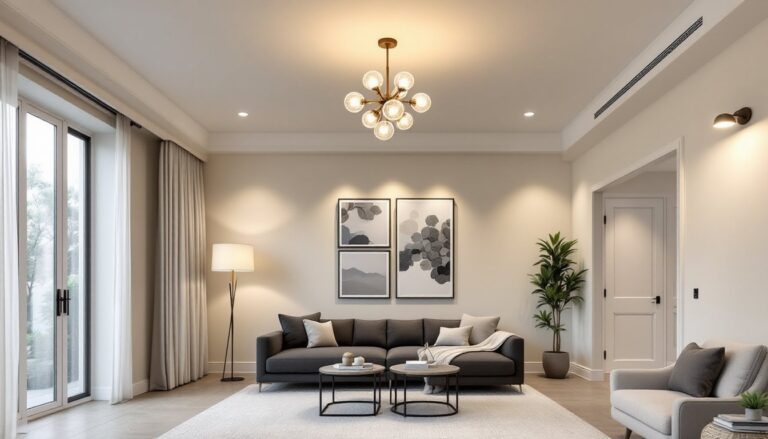
For those exploring broader lighting applications, techniques from ceiling lighting installations in other rooms often translate well to dining spaces.
Smart Lighting Control Systems
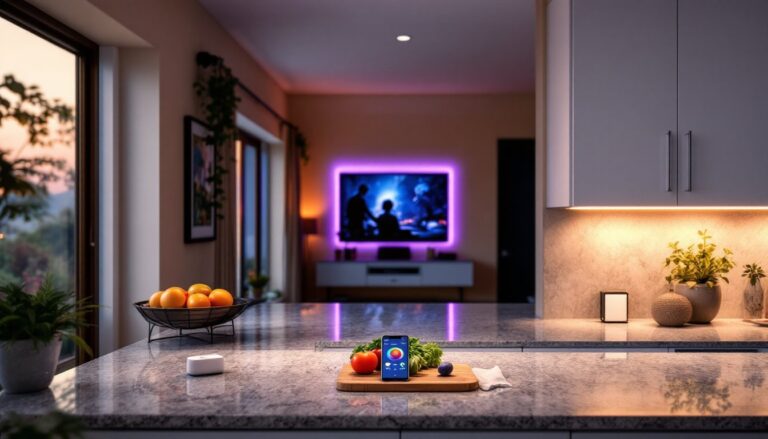
Smart switches, dimmers, and bulbs let homeowners adjust dining room lighting from phones, voice assistants, or programmed scenes. Philips Hue, Lutron Caséta, and Leviton Decora dominate the residential market, each with different installation requirements.
Smart bulbs screw into existing sockets and connect via Wi-Fi or Zigbee hubs. They’re the easiest retrofit but rely on the wall switch staying on, flip it off, and the smart features stop working. Smart switches replace the physical wall switch and control any bulb type, but installation requires a neutral wire and comfort working with live circuits.
System compatibility matters. If you’re already using Alexa or Google Home elsewhere, pick lighting that integrates natively. Mixing ecosystems creates headaches.
Programmed scenes shine in dining rooms. Set “Dinner Party” to 80% brightness and warm white, “Assignments” to full brightness and neutral white, and “Mood” to 30% amber, all without touching a dial. Most systems also support gradual dimming or “sunrise” routines.
Installing a smart dimmer follows the same steps as a standard dimmer: power off at the breaker, remove the old switch, connect hot (usually black), neutral (white), load (often red or second black), and ground (bare copper or green). If the wiring confuses you, hire an electrician. Improperly wired switches create fire hazards.
Publications like Design Milk frequently showcase how smart systems integrate with modern design aesthetics.
Conclusion
Dining room lighting in 2026 prioritizes flexibility, warmth, and personality over one-size-fits-all builder-grade fixtures. Whether installing a statement chandelier, layering multiple sources, or integrating smart controls, the key is matching the lighting to how the space actually gets used. Most fixture swaps require only basic electrical knowledge and an afternoon, but don’t hesitate to call a licensed electrician for circuit work or heavy installations. The right lighting transforms a dining room from functional to memorable, and that’s worth getting right the first time.