A well-lit backyard isn’t just about flipping a floodlight switch and calling it done. Thoughtful landscape lighting transforms outdoor spaces into usable, safe, and visually striking areas long after sunset. Whether it’s highlighting a favorite oak tree, guiding guests along a flagstone path, or casting a warm glow over a deck gathering, the right fixtures can extend living space well into the evening. With advances in LED technology and low-voltage systems, homeowners can now tackle landscape lighting projects without hiring an electrician for every fixture. This guide walks through practical, effective lighting ideas for every corner of the backyard.
Table of Contents
ToggleKey Takeaways
- Backyard landscape lighting ideas serve three essential purposes—safety, security, and aesthetics—while increasing property value and extending usable outdoor hours.
- Low-voltage LED systems (12V or 24V) are safer, easier to install than standard wiring, and require no electrical permit in most jurisdictions, making them ideal for DIY homeowners.
- Path and accent lighting require strategic spacing (6–8 feet apart for pathways) and placement techniques like uplighting for trees and wash lighting for shrubs to create dramatic visual effects.
- Deck and patio lighting should balance ambiance with functionality using recessed lights, string lights, and task lighting that provides at least 800–1,000 lumens for safe food preparation.
- LED bulbs are the standard choice, using 75% less energy than incandescent, lasting 25,000–50,000 hours, with warm white (2700K–3000K) color temperatures best suited for residential landscape lighting.
- A well-planned approach layering multiple lighting techniques and starting with a yard sketch helps homeowners tackle low-voltage landscape lighting projects over a weekend with basic tools.
Why Outdoor Landscape Lighting Matters for Your Backyard
Landscape lighting serves three core purposes: safety, security, and aesthetics. Properly lit pathways reduce trip hazards, especially on uneven pavers or gravel. Motion-activated lights near entry points deter unwanted visitors and give homeowners peace of mind. And strategically placed accent lights turn ordinary yards into showpieces visible from inside the house.
Beyond the basics, good lighting increases property value. Curb appeal doesn’t stop at the front door, buyers notice well-designed backyards. It also extends usable hours outdoors. A family can enjoy dinner on the patio or kids can finish a game of catch without racing against dusk.
Most residential landscape lighting runs on low-voltage systems (12V or 24V), which are safer and easier to install than standard 120V line-voltage wiring. These systems use a transformer plugged into a GFCI-protected outlet, stepping down household current. This means no electrical permit in most jurisdictions, though it’s always smart to check local codes. For more complex setups, like lighting a large property or integrating with home automation, consult a licensed electrician.
Pathway and Walkway Lighting Solutions
Path lights are the workhorses of landscape lighting. They guide foot traffic, mark borders, and prevent twisted ankles on uneven ground. The goal is even, gentle illumination, not a runway. Space fixtures 6 to 8 feet apart along walkways, adjusting for curves and width.
Bollard lights stand 18 to 24 inches tall and cast a wide, diffused pool of light. They work well along driveways and wider garden paths. For a subtler look, consider in-ground well lights or recessed step lights set into risers or retaining walls. These keep the fixture itself nearly invisible while still providing functional light.
Solar path lights are tempting for their ease of installation, no wiring, just stake and go. But they’re often underpowered and fade in cloudy climates or shaded yards. For reliable, year-round performance, low-voltage LED path lights connected to a transformer are the better bet. A 150-watt transformer can power 10 to 15 LED fixtures, depending on wattage.
Use fixtures with hooded or louvered designs to direct light downward and reduce glare. Nobody wants to squint their way to the shed. And always bury low-voltage cable at least 6 inches deep to protect it from shovels and aerators.
Accent Lighting for Trees, Shrubs, and Garden Features
Accent lighting is where landscape design gets dramatic. The right fixture can turn a Japanese maple into a backlit sculpture or make a stone birdbath the focal point of the yard. The technique here is uplighting, placing fixtures at ground level and aiming them upward.
For trees, position a bullet or spot fixture 2 to 3 feet from the trunk, angled to graze the bark and canopy. This creates texture and depth. Adjust the beam spread based on tree size: narrow spots for tall, narrow conifers: wide floods for broad oaks or maples. Many modern LED fixtures offer adjustable beam angles.
Shrubs and ornamental grasses benefit from wash lighting, multiple fixtures casting overlapping pools of soft light. This works especially well for layered plantings along fences or foundation beds. Garden features like statues, urns, or trellises can be lit from below or behind for silhouette effects.
Avoid light pollution by choosing fixtures with shields or hoods. Light should stay in the yard, not spill into neighbors’ windows or the night sky. And remember: less is often more. Over-lighting flattens depth and washes out detail. Aim for contrast and shadow, not stadium brightness.
Deck and Patio Lighting for Entertaining Spaces
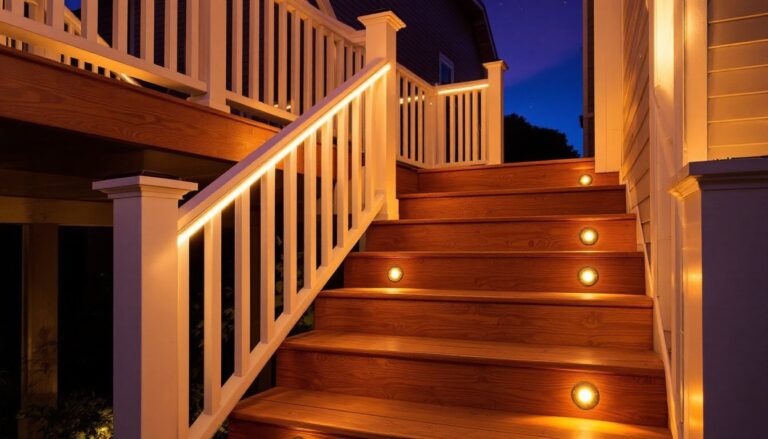
Decks and patios are social hubs after dark, so lighting here needs to balance ambiance with practicality. Recessed deck lights installed flush with the surface illuminate steps and railings without cluttering sightlines. Mount them in risers, post caps, or under bench seating. Most use 2-watt to 3-watt LEDs, which is plenty for accent and step safety.
String lights add instant warmth and a café vibe. Use Edison-style LED bulbs for vintage appeal or globe bulbs for a modern look. String them overhead on posts, pergola beams, or between trees. Just make sure the wire is rated for outdoor use and connect to a GFCI outlet.
For task lighting over grills or outdoor kitchens, consider pendant lights or sconces mounted on posts or exterior walls. These need to be bright enough for safe food prep, look for fixtures with at least 800 to 1,000 lumens. Switching to LED exterior home lighting can reduce energy use while providing consistent, reliable illumination for evening entertaining.
Under-rail lighting is another subtle option. LED strips or puck lights mounted beneath the top rail cast a soft glow downward, defining the deck perimeter without harsh glare. Many systems are dimmable, so the mood can shift from bright cocktail hour to low-lit lounge mode.
Water Feature and Pond Lighting Techniques
Water catches light like nothing else in the landscape. A well-lit fountain, pond, or stream becomes a nighttime centerpiece. But wet environments demand specific fixtures and careful placement.
Use only submersible or waterproof-rated lights near or in water. Look for an IP68 rating, which means the fixture is dust-tight and can handle continuous submersion. Most pond lights are low-voltage LEDs designed to sit on the bottom or clip to the edge.
For fountains, position lights beneath the water surface to illuminate the spray from below. This creates a glowing column effect. For ponds, aim lights at the waterfall or spillway to highlight movement. Avoid lighting the entire pond surface, it looks unnatural. Instead, focus on key features like lily pads, fish, or rockwork.
Uplighting around the perimeter works well for naturalistic ponds. Place fixtures behind rocks or plants to graze the water’s edge without seeing the source. Adjust angles to minimize reflection and glare.
Maintain these fixtures regularly. Algae and mineral deposits dim output fast. Clean lenses every few months and check seals annually. And always use a GFCI outlet, water and electricity don’t mix without safeguards.
Choosing the Right Fixtures and Bulbs for Your Landscape
Not all landscape lights are created equal. Fixtures need to withstand rain, snow, UV exposure, and temperature swings. Look for housings made of brass, copper, or powder-coated aluminum, these resist corrosion far better than plastic.
LED bulbs are the standard now. They use 75% less energy than incandescent, last 25,000 to 50,000 hours, and produce less heat. Color temperature matters: 2700K to 3000K (warm white) mimics incandescent and suits most residential landscapes. Cooler temps (4000K+) feel clinical and are better for security or task lighting.
Pay attention to lumens, not watts. A 3-watt LED might output 200 lumens, enough for path lighting. Accent fixtures for trees or architectural features may need 400 to 600 lumens. For comparison, better home up lighting often uses similar lumen ranges to create dramatic effects on building facades.
Transformers should have at least 20% more capacity than the total wattage of connected fixtures. If you’re running 120 watts of lights, use a 150-watt transformer. This prevents overheating and extends transformer life. Many models include photocells or timers for automatic on/off.
Consider smart controls for convenience. Wi-Fi-enabled transformers let homeowners adjust brightness, set schedules, or create zones from a phone app. These systems integrate with platforms like Alexa or Google Home. Installation is DIY-friendly if you’re comfortable with basic wiring and following manufacturer diagrams.
Conclusion
Landscape lighting isn’t a one-size-fits-all proposition. The best setups layer multiple techniques, path lights for safety, accents for drama, and ambient lighting for gathering spaces. Start with a plan: sketch the yard, note existing outlets, and prioritize high-traffic or high-impact areas. Most homeowners can install low-voltage systems over a weekend with basic tools and attention to detail. The result is a backyard that works harder, looks better, and stays safe after the sun goes down.