Outdoor wall sconces do more than just illuminate a dark entryway, they’re workhorses that improve safety, boost curb appeal, and extend usable hours on porches and patios. Whether you’re navigating front steps after sunset or creating ambiance for an evening gathering, the right fixture in the right spot makes all the difference. This guide walks through selecting, placing, and installing outdoor lighting wall sconces so homeowners can tackle the project with confidence and get results that last.
Table of Contents
ToggleKey Takeaways
- Outdoor wall sconces enhance safety, curb appeal, and usable outdoor living space while improving energy efficiency with modern LED technology drawing as little as 8–15 watts.
- Choose between traditional lantern-style sconces for Colonial and farmhouse designs or modern geometric fixtures for contemporary homes, considering light direction, color temperature, and smart integration features.
- Mount entryway sconces 66–72 inches above finished floor on either side of doors; space deck and patio fixtures every 8–10 feet at 48 inches height for even, cohesive coverage.
- Most outdoor lighting wall sconces installations require electrical permits and GFCI protection under Article 210.8 of the National Electrical Code, so verify local building department requirements before starting.
- Maintain sconces with quarterly cleaning, annual gasket inspections, and monthly sensor maintenance to prevent corrosion and ensure fixtures last 10–20 years with proper care.
Why Outdoor Wall Sconces Are Essential for Your Home
Safety is the primary reason most homeowners install wall-mounted fixtures. Illuminated entryways, garage doors, and pathways reduce trip hazards and deter unwanted visitors. Motion-sensor sconces add an extra layer of security without leaving lights burning all night.
Curb appeal gets an instant upgrade when sconces flank a front door or highlight architectural details like columns, stone veneer, or shiplap siding. Real estate agents consistently note that well-lit exteriors photograph better and signal pride of ownership.
Functionality extends living space outdoors. A pair of sconces on either side of a patio door turns a deck into a usable room after dark, whether for grilling, reading, or entertaining. Code-compliant fixtures also meet requirements for egress lighting in many jurisdictions, check local amendments to the International Residential Code (IRC) if you’re adding or replacing lights near exits.
Energy efficiency has improved dramatically with LED technology. Modern sconces draw as little as 8–15 watts while delivering 800+ lumens, and many include photocell or smart controls to automate on/off cycles. Homeowners exploring broader upgrades will find LED exterior lighting cuts electric bills and reduces bulb-change trips up ladders.
Types of Outdoor Lighting Wall Sconces to Consider
Traditional and Lantern-Style Sconces
Lantern sconces feature clear or seeded glass panels in metal frames, typically black, bronze, or brushed nickel finishes. They suit Colonial, Craftsman, and farmhouse exteriors and often include Edison-style LED filament bulbs for a warm glow.
Key considerations:
- Wet-rated vs. damp-rated: Wet-rated fixtures (sealed gaskets, corrosion-resistant housings) are required for fully exposed walls: damp-rated works under eaves or covered porches.
- Bulb access: Top-hinged or bottom-hinged doors make bulb changes easier than removing the entire fixture.
- Proportions: A fixture should measure roughly one-quarter to one-third the height of the door it flanks. For an 80-inch door, aim for 20–27 inches tall.
Traditional sconces pair well with hardware in matching finishes, think coach lights with oil-rubbed bronze hinges and kick plates.
Modern and Contemporary Designs
Geometric sconces, rectangular wall washers, cylindrical up/down lights, and minimalist backplates, complement mid-century, industrial, and modern farmhouse styles. Materials include powder-coated aluminum, stainless steel, and frosted acrylic diffusers.
Design features to evaluate:
- Light direction: Downlights prevent glare and work near seating areas: uplights graze textured walls (stucco, brick, board-and-batten) for drama: bidirectional sconces do both.
- Color temperature: 2700K–3000K (warm white) feels inviting: 4000K+ (cool white) reads as clinical but improves visibility on steps.
- Smart integration: Many contemporary fixtures include built-in WiFi or work with low-voltage systems compatible with Lutron Caséta or Philips Hue hubs.
These designs often look best in odd-number groupings or asymmetric placements rather than strict pairs. Design enthusiasts researching curated sconce collections will see how finishes and fixture shapes create visual rhythm.
Choosing the Right Placement for Maximum Impact
Entryways and front doors follow a standard formula: mount sconces 66–72 inches above the finished floor (to the center of the fixture), spaced evenly on either side of the door. If the door is off-center or there’s only room for one sconce, place it on the handle side so visitors see light as they approach.
Garage doors benefit from a single sconce centered above the door or two smaller fixtures flanking it. Mount at least 12 inches above the door trim to avoid interference when the door opens.
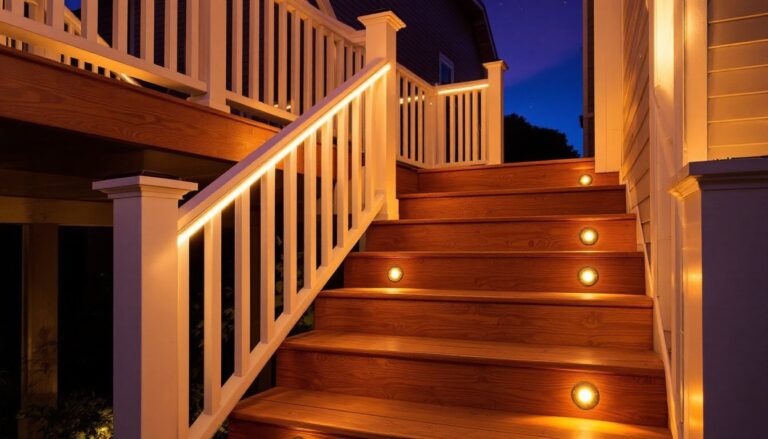
Decks and patios require fixtures every 8–10 feet for even coverage. Install them at the same height as interior switches (48 inches to centerline) so the space feels cohesive. If the deck has steps, add a downlight sconce at the top of the run to illuminate treads, critical for code compliance in many areas.
Pathways and fence lines call for shielded or hooded sconces to prevent glare. Space them 6–8 feet apart and aim beams downward. For fences taller than 6 feet, consider wall-washing fixtures that highlight texture without blinding passersby.
Avoiding common mistakes:
- Don’t mount sconces so high that they create harsh shadows under eaves.
- Keep fixtures at least 6 inches from door trim to avoid visual clutter.
- Run conduit inside walls or use surface-mount weatherproof boxes if fishing wire isn’t feasible.
Homeowners planning comprehensive outdoor schemes often integrate wall sconces alongside path lights and other exterior lighting strategies for layered illumination.
Installation Tips for DIY Homeowners
Electrical permits and codes: Most jurisdictions require a permit for new outdoor circuits. If you’re replacing a fixture on an existing box, no permit is typically needed, but always verify with your local building department. Work must meet National Electrical Code (NEC) Article 210.8 for GFCI protection on outdoor receptacles and lights.
Tools and materials:
- Voltage tester (non-contact or two-lead)
- Wire stripper/cutter
- Screwdriver set (flat and Phillips)
- Drill/driver with masonry bits (if mounting to brick or stucco)
- Silicone caulk (exterior-grade)
- Wire nuts (yellow for 14 AWG, red for 12 AWG)
- Outdoor-rated junction box (round “pancake” boxes work for retrofit: octagonal boxes for new construction)
Step-by-step installation:
- Kill power at the breaker. Use a voltage tester to confirm the circuit is dead at the existing box.
- Remove the old fixture (if replacing). Unscrew wire nuts, separate wires, and detach the mounting bracket.
- Inspect the box. If it’s plastic and cracked, replace it with a metal wet-location box anchored to a stud or blocking. Boxes should sit flush with or slightly recessed from siding.
- Attach the mounting bracket from the new sconce. Most use a crossbar with threaded nipples or keyhole slots.
- Connect wires: Match black (hot) to black, white (neutral) to white, and bare copper or green (ground) to the box ground screw. Twist connections clockwise, secure with wire nuts, and wrap with electrical tape.
- Tuck wires into the box carefully, don’t pinch insulation. Screw the fixture to the bracket.
- Seal gaps with a bead of silicone caulk where the backplate meets the siding. This prevents water infiltration.
- Restore power and test. If the fixture has a photocell or motion sensor, cover the sensor briefly to verify it triggers.
When to call a pro: If you need to run new wire through exterior walls, bore through brick, or tap into a main panel, hire a licensed electrician. Drilling through structural headers or installing boxes in stucco without proper flashing can cause water damage that costs more to fix than the install would’ve cost upfront. Homeowners sourcing fixtures from retailers like the Home Depot lighting section often find in-store pros who can recommend compatible boxes and trim kits for specific siding types.
Maintenance and Care for Long-Lasting Performance
Seasonal cleaning: Wipe glass and metal surfaces every three months with a microfiber cloth and mild soapy water. Coastal environments require monthly cleaning to remove salt buildup, which corrodes finishes. Avoid ammonia-based cleaners on powder-coated aluminum, they dull the finish.
Gasket inspection: Check rubber or silicone gaskets annually. Cracked gaskets let moisture into the fixture, fogging glass and corroding sockets. Replacement gaskets are inexpensive: most manufacturers sell them as service parts.
Bulb replacement: LED modules in integrated fixtures last 25,000–50,000 hours (roughly 10–20 years at 6 hours/day), but driver circuits can fail sooner. If an integrated fixture flickers or dims, the driver may need replacement, a task best left to an electrician. Sconces with standard E26 sockets let homeowners swap bulbs easily: choose outdoor-rated LEDs to prevent premature failure from temperature swings.
Finish touch-ups: Scratches in painted or powder-coated fixtures can be touched up with matching spray paint. Clean the area with denatured alcohol, apply light coats, and seal with a clear UV-resistant topcoat.
Photocell and sensor maintenance: Dust and spider webs block sensors, causing lights to stay on during the day or fail to trigger at night. Wipe sensors with a damp cloth monthly. If a photocell stops working, most twist out of the fixture base and can be replaced without rewiring.
Winter prep: In freezing climates, confirm fixtures are wet-rated and that bulbs are cold-rated LEDs. Incandescent and some CFL bulbs fail quickly in subzero temps. Clear snow and ice from fixture housings to prevent stress cracks.
Proactive care extends fixture life and keeps warranties valid. Many manufacturers void coverage if corrosion results from neglected maintenance. Homeowners interested in accent techniques alongside sconces can explore uplighting strategies that layer architectural and landscape lighting for year-round appeal, as noted by experts at The Spruce.
Final check: Walk your property at dusk every few months to confirm all sconces light as expected. Burnt-out bulbs, tripped GFCIs, and loose photocells are easier to fix before guests arrive or a storm rolls in. Consistent upkeep means outdoor wall sconces remain a reliable, attractive feature for decades.