The right lighting turns a dining room from a place you eat into a space you want to linger in. Too dim, and the room feels cave-like. Too bright, and it’s a cafeteria. Getting it right means balancing function with atmosphere, and that’s easier than most homeowners think. Whether you’re replacing a builder-grade fixture or planning a full renovation, the options have expanded dramatically. This guide walks through practical dining room lighting strategies with real-world examples, sizing rules, and installation considerations to help you make smart choices that fit your space, style, and budget.
Table of Contents
ToggleKey Takeaways
- Dining room lighting ideas should balance function and atmosphere by combining ambient, task, and accent fixtures—with dimmers on all circuits for full control over mood and practicality.
- Proper sizing and hanging height are critical: add room length and width in feet, convert to inches for ideal fixture diameter, and hang 30–36 inches above the tabletop to avoid harsh shadows and unflattering light on faces.
- Chandeliers suit formal spaces and work well in rooms with 9-foot ceilings, while pendant lights offer flexible design options for contemporary dining spaces and can accommodate rectangular tables with linear or clustered layouts.
- Rustic and farmhouse dining room lighting styles use natural materials and vintage finishes like wagon wheels and lantern pendants, but open bulbs require careful positioning to prevent glare and eye strain.
- Budget for an electrician if adding new circuits for sconces or accent lights, as dining rooms require AFCI protection under the National Electrical Code and often share circuits with kitchen outlets.
- Install wall sconces 60–66 inches from the floor for comfortable task lighting, and always use adjustable chain or cord to fine-tune height before permanent installation to avoid installation mistakes.
Why Dining Room Lighting Matters More Than You Think
Dining room lighting does three jobs at once: it sets the mood, defines the space, and makes the food look appetizing. Bad lighting can wash out faces, cast unflattering shadows, or make a beautifully set table look flat.
From a practical standpoint, dining rooms often double as assignments stations, game nights, or work-from-home overflow. The fixture you choose should handle multiple light levels, ideally with a dimmer switch (more on that shortly).
Architecturally, the dining room light anchors the room. It’s usually the first thing people notice when they walk in. A well-chosen fixture draws the eye to the table and creates a visual center, especially in open-plan homes where the dining area bleeds into the kitchen or living room.
Don’t overlook the electrical reality: Most dining rooms have a single ceiling box, often center-mounted. If you’re planning layered lighting or wall sconces, you’ll need additional wiring, and possibly a permit, depending on local codes. Budget for an electrician if you’re adding new circuits.
Statement Chandeliers That Steal the Show
A chandelier is the classic choice for a reason: it delivers high-impact style and evenly distributed light. Modern chandeliers range from traditional crystal to industrial caged-bulb designs.
Traditional chandeliers with multiple arms and candelabra bulbs work well in formal dining rooms with 9-foot or higher ceilings. Look for fixtures with at least five to eight arms to provide adequate light for a standard dining table. Expect these to weigh 15–30 pounds, so verify your ceiling box is rated for the load (most standard boxes handle up to 50 pounds, but older homes may need reinforcement).
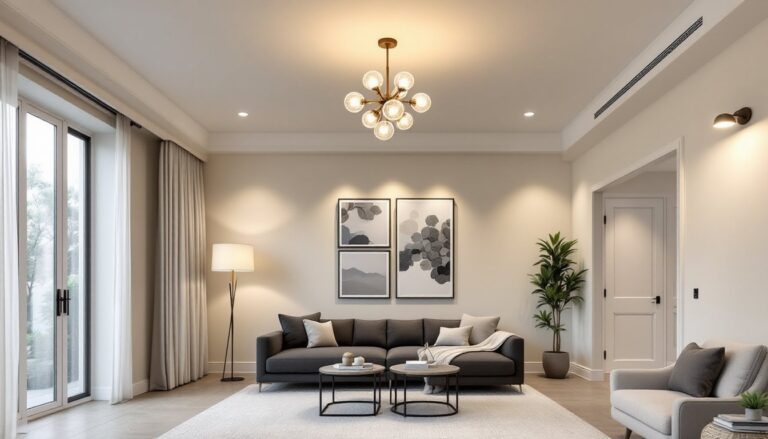
Contemporary chandeliers often feature geometric shapes, mixed materials like brass and glass, or sculptural forms. Sputnik-style fixtures, those mid-century designs with radiating arms, are having a moment and pair well with both modern and eclectic interiors. These typically use E26 medium-base bulbs, making it easy to swap in dimmable LEDs.
Crystal and glam chandeliers reflect light beautifully and add sparkle, but they’re high-maintenance. Plan to dust them monthly and deep-clean annually. If that sounds tedious, consider glass or acrylic alternatives that mimic the look with less upkeep.
Installation tip: Chandeliers often ship in pieces. Budget 1–2 hours for assembly and hanging, and have a second person on hand to hold the fixture while you wire it. If your existing box has outdated wiring or no ground, hire a licensed electrician, dining room fixtures are often on the same circuit as kitchen outlets, and you don’t want nuisance tripping.
Modern Pendant Lights for Contemporary Dining Spaces
Pendant lights offer flexibility that chandeliers can’t match. You can hang a single oversized pendant, a linear cluster, or a row of three smaller pendants over a rectangular table.
Single pendants work best over round or small square tables (up to 48 inches). Choose a shade diameter that’s 12 to 20 inches for visual balance. Drum shades, globe pendants, and woven rattan designs are popular. Make sure the bottom of the shade is open or translucent, solid bottoms create harsh shadows.
Linear pendants (also called island lights) are ideal for long rectangular tables. These multi-bulb fixtures typically measure 30 to 48 inches in length and hang from a single canopy. They’re easier to install than multiple pendants because you’re only dealing with one electrical connection.
Clustered pendants (three or more individual pendants on a shared canopy) create a dramatic, layered look. Space them 8 to 12 inches apart for even light distribution. Many modern designs use exposed Edison bulbs, which look great but produce less light than frosted bulbs, pair them with a higher wattage (60W equivalent LED minimum) or add supplemental lighting.
Installation note: Pendants often include adjustable cord or chain. Measure carefully before cutting, you can always shorten, but you can’t add length without splicing, which looks sloppy. If you’re converting from a chandelier, the existing box and wiring will usually work, but double-check the weight rating.
Layered Lighting: Combining Ambient, Task, and Accent Fixtures
Relying solely on overhead lighting is a missed opportunity. Layered lighting, combining ambient, task, and accent sources, gives you control over mood and function.
Ambient lighting is your base layer, usually the chandelier or pendant. This should provide general illumination without harsh glare. Aim for 150 to 300 lumens per square foot in a dining room, depending on ceiling height and finish colors (darker walls absorb more light).
Task lighting supplements the overhead fixture for activities like reading, crafts, or assignments. Wall sconces flanking a buffet or sideboard add both function and style. Swing-arm sconces are especially useful in small dining rooms where space is tight. Install sconces 60 to 66 inches from the floor to the center of the fixture, this puts the light at a comfortable height for most people.
Accent lighting highlights artwork, architectural features, or a hutch filled with dishware. Adjustable track lighting or recessed cans with directional trims work well for this. Picture lights are another option if you have large art over a sideboard. Many interior design enthusiasts explore romantic dinner ideas to see how layered lighting transforms ambiance.
Dimmers are non-negotiable for layered lighting. Install them on all circuits so you can dial in the right level for dinner parties, family meals, or late-night snacks. Most LED bulbs are dimmable, but verify compatibility with your dimmer switch (older rotary dimmers may cause flickering with LEDs, upgrade to an LED-compatible dimmer if needed).
If you’re adding new circuits for sconces or accent lights, consult local building codes. The NEC (National Electrical Code) requires AFCI (arc-fault circuit interrupter) protection for most residential branch circuits, including dining rooms. That’s a job for a licensed electrician.
Rustic and Farmhouse Dining Room Lighting Styles
Rustic and farmhouse lighting leans on natural materials, vintage-inspired finishes, and handcrafted details. These styles work in both traditional farmhouses and modern homes looking for warmth and texture.
Wagon wheel chandeliers are the poster child of rustic lighting. They’re typically made from wood or wrought iron, with candelabra bulbs arranged around a central ring. These fixtures are large (30–40 inches in diameter) and heavy, so reinforce your ceiling box if needed. Pair them with dimmable filament bulbs for that warm, amber glow.
Lantern pendants offer a cleaner take on rustic style. Metal frames with clear or seeded glass panels work in both farmhouse and transitional spaces. These often hang from chain, giving you flexibility on drop length. Black or aged bronze finishes are the most versatile.
Wood beam chandeliers combine reclaimed wood with Edison bulbs or metal cage shades. These linear fixtures suit long farmhouse tables and open-concept spaces. Expect to pay more for authentic reclaimed wood, faux beams (made from polyurethane or composite) are a budget-friendly alternative that’s lighter and easier to hang.
Mason jar pendants and chandeliers hit peak popularity a few years ago, but they’re still a solid DIY option. You can build your own with a chandelier conversion kit, mason jars, and some basic wiring skills, just make sure the jars are tempered glass and rated for heat from bulbs. Alternatively, when browsing options at Home Depot Lighting, you’ll find pre-made mason jar fixtures that meet UL safety standards.
One caution with rustic fixtures: Open bulbs and minimal shades can create glare. Position the fixture so bulbs aren’t at eye level when seated, or choose frosted or amber-tinted bulbs to soften the light.
How to Choose the Right Size and Height for Your Fixtures
Sizing and placement aren’t subjective, there are rules of thumb that prevent your fixture from looking too small, too large, or hung at the wrong height.
Fixture diameter: Add the room’s length and width (in feet), then convert that sum to inches. That’s your ideal fixture diameter. For example, a 12-foot by 14-foot dining room (12 + 14 = 26) calls for a fixture roughly 26 inches in diameter. For rectangular tables, consider the table’s proportions, over a 96-inch-long table, a linear pendant in the 36 to 48-inch range works better than a round chandelier.
Hanging height: The bottom of the fixture should hang 30 to 36 inches above the tabletop. Lower works for intimate settings: higher for rooms with tall ceilings or to accommodate tall centerpieces. Measure from the table surface, not the floor, table heights vary between 28 and 30 inches.
Table clearance: The fixture should be 12 inches narrower than the table on all sides. A 42-inch round table can handle up to an 18-inch fixture, while a 72-inch rectangular table can accommodate a 36-inch fixture or three 12-inch pendants.
Ceiling height: Standard 8-foot ceilings limit your options. Flush-mount or semi-flush fixtures may be your only choice in rooms where a chandelier would hang too low. For 9-foot ceilings or higher, you can use longer drops. Many ceiling lighting solutions in adjacent rooms like home offices share similar installation principles.
If you’re working in an open floor plan, coordinate your dining room fixture with nearby lighting. The style doesn’t have to match exactly, but finishes and scale should feel cohesive. Design inspiration from sources like HGTV often shows how pros balance multiple fixtures in shared spaces.
Use adjustable chain, rod, or cord to fine-tune height during installation. If your fixture ships with 6 feet of chain and you only need 2, remove the excess links before hanging, don’t just bunch it up inside the canopy.
Conclusion
Dining room lighting isn’t a one-size-fits-all decision. The right fixture depends on your room’s size, ceiling height, table shape, and how you use the space. Whether you go with a classic chandelier, modern pendants, or a layered approach with sconces and dimmers, the key is balancing style with function. Measure carefully, consider your electrical setup, and don’t skip the dimmer switch. With the right planning, your dining room will look as good as the meals you serve in it.