Commercial outdoor lighting isn’t just about flipping a switch when the sun goes down, it’s about safety, curb appeal, and extending usable hours for your business property. Whether you’re illuminating a retail storefront, securing a warehouse perimeter, or highlighting architectural features on an office building, the right lighting setup can reduce liability, attract customers, and cut energy costs by 40% or more when done right. LED technology has changed the game entirely, offering commercial-grade fixtures that last 50,000+ hours and handle weather extremes without constant maintenance calls. This guide walks through fixture types, key features, and installation basics so property owners and facility managers can make informed decisions without getting lost in contractor jargon.
Table of Contents
ToggleKey Takeaways
- Commercial outdoor LED lighting reduces energy costs by 50-75% compared to traditional metal halide systems while lasting 50,000+ hours with minimal maintenance.
- Well-lit commercial properties experience 30-40% fewer break-ins and reduce liability through proper illumination of walkways, parking areas, and perimeters that meet municipal codes.
- Choose fixtures with IP65 minimum ratings, published L70 data (quality LEDs reach 50,000-70,000 hours), and 5-10 year warranties to ensure durability against weather extremes and UV exposure.
- Line-voltage commercial outdoor lighting installations require permits, licensed electricians, and NEC compliance; low-voltage systems under 1000VA may bypass permits depending on local codes.
- Match color temperature (3000K for retail, 4000K for parking, 5000K for warehouses) and add photocells or motion sensors to automate lighting and cut runtime by 50% in low-traffic zones.
- Avoid common mistakes like mounting fixtures on hollow surfaces without proper anchors, burying junction boxes under pavement, or mixing light temperatures across your property for a cohesive, professional appearance.
What Is Commercial Outdoor Lighting and Why Does It Matter?
Commercial outdoor lighting refers to purpose-built fixtures designed for business properties, parking lots, walkways, building facades, and outdoor work areas. Unlike residential setups, these systems handle higher voltage loads, meet stricter safety codes, and use heavy-duty materials rated for constant exposure to UV, moisture, and temperature swings.
Here’s why it matters beyond just visibility:
- Liability reduction: Properly lit walkways, stairs, and parking areas reduce slip-and-fall claims. Most municipalities and insurance carriers have minimum illumination requirements (typically 1-5 foot-candles for pedestrian areas).
- Crime deterrence: Studies show well-lit commercial properties experience 30-40% fewer break-ins. Motion-activated floods and perimeter lighting eliminate blind spots.
- Extended business hours: Retailers and restaurants with quality outdoor lighting can operate later and create inviting evening atmospheres.
- Energy costs: Switching from metal halide or high-pressure sodium to commercial LED outdoor lighting cuts energy use by 50-75%. A 400-watt metal halide replaced by a 150-watt LED yields similar lumens at a fraction of operating cost.
Most commercial installations require permits and NEC (National Electrical Code) compliance, especially for line-voltage systems above 120V. If you’re adding circuits or replacing panel capacity, hire a licensed electrician, this isn’t DIY territory for most property owners.
Types of Commercial Outdoor Lighting for Different Applications
Choosing fixtures starts with matching the application. Here’s a breakdown by function.
Security and Safety Lighting Solutions
Floodlights remain the workhorse for parking lots, loading docks, and perimeter security. Look for fixtures rated at 70-150 watts LED (equivalent to 250-400W HID) with adjustable mounts. Bronze or powder-coated aluminum housings resist corrosion better than bare steel.
Wall packs mount directly to building exteriors and provide downward, forward, or 180-degree coverage. Full-cutoff wall packs (IESNA Type III distribution) direct light downward to meet dark-sky ordinances and prevent light trespass onto neighboring properties. Most municipalities now require full-cutoff fixtures in new commercial installs.
Pole-mounted area lights work for large parking areas. Standard pole heights run 15-30 feet: taller poles (30-40 feet) suit big-box stores or industrial yards but need concrete foundations poured to frost line (typically 36-48 inches deep, depending on region). Mounting hardware must handle wind loads per local codes, coastal or high-wind zones require upgraded brackets.
Motion-sensor floods save energy in low-traffic zones like side entries or storage areas. Dual-tech sensors (microwave + PIR) reduce false triggers from animals or blowing debris.
Safety note: Always de-energize circuits at the breaker and use a non-contact voltage tester before working on line-voltage fixtures. Wear safety glasses and insulated gloves rated for electrical work.
Accent and Architectural Lighting
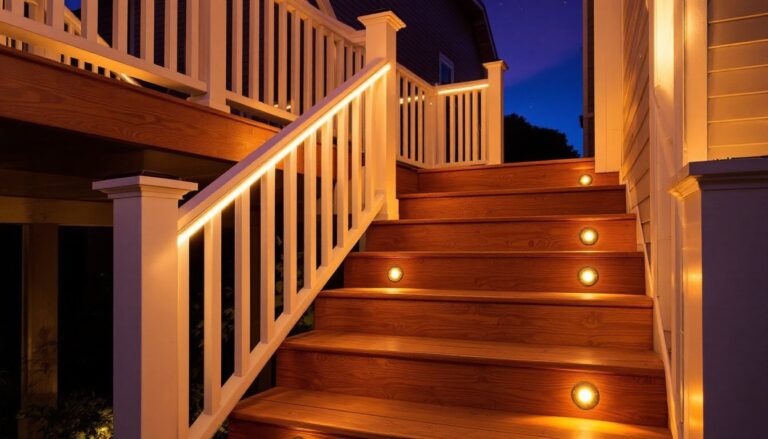
Up-lights (also called well lights or in-ground fixtures) highlight building facades, signage, or landscaping. Use IP67-rated fixtures for in-ground installs, anything less will leak within a season. Angle fixtures 30-45 degrees from the base of walls to avoid harsh shadows.
Linear wall grazers mounted at grade or roofline create dramatic texture on brick, stone, or stucco. They’re popular on breweries, boutiques, and mixed-use developments. Choose 3000K color temperature for warm tones on natural materials: 4000K for modern steel or concrete facades.
String lights and decorative fixtures aren’t just for patios anymore. Commercial-grade string lights with stainless steel cables and sealed sockets handle outdoor dining areas, beer gardens, and event spaces. Residential-grade lights fail within months under constant use, commercial versions use thicker wire gauge (14 AWG or 12 AWG vs. 18 AWG) and rubberized sockets.
Bollard lights line walkways and parking edges. Standard heights run 30-42 inches. Concrete-filled bollards double as vehicle barriers in high-traffic areas, important near storefronts or pedestrian zones.
Key Features to Look for in Commercial Outdoor Fixtures
Not all fixtures marketed as “commercial” hold up to real-world use. Here’s what separates contractor-grade gear from big-box specials.
IP ratings: This two-digit code indicates dust and water resistance. For outdoor use, aim for IP65 minimum (dust-tight, protected against water jets). In-ground or underwater fixtures need IP67 or IP68. The first digit covers solids: the second covers liquids.
Lumen output and efficacy: Commercial LED fixtures range from 50 to 150+ lumens per watt. A parking lot might need 10,000-15,000 lumens per pole: a wall pack might deliver 3,000-5,000 lumens. Don’t confuse lumens (total light) with foot-candles (light at a surface). Use a photometric plan for precise coverage, many manufacturers provide free layouts if you submit a site drawing.
Color temperature: 3000K (warm white) suits hospitality and retail: 4000K (neutral white) works for parking and task areas: 5000K (daylight) fits warehouses and security zones. Mixing temperatures on one property looks sloppy, pick one and stick with it.
Dimming and controls: 0-10V dimming is standard in commercial LED fixtures. Pair with photocells (dusk-to-dawn sensors) or astronomical timers (programmed by zip code and season) to automate on/off cycles. Adding occupancy sensors in low-use areas can cut runtime by 50%.
Surge protection: Minimum 10kV surge rating protects against lightning and grid fluctuations. Some high-end fixtures include 20kV protection, worth it in storm-prone regions.
Warranty and L70 rating: L70 measures how long until a fixture drops to 70% of initial lumens. Quality commercial LEDs hit 50,000-70,000 hours at L70. Cheap fixtures often fail to publish L70 data, red flag. Look for 5-year minimum warranties on drivers and LEDs: 10-year is becoming standard.
Installation Tips and Best Practices for Outdoor Commercial Lighting
Most commercial outdoor lighting requires a licensed electrician, but understanding the process helps property owners plan budgets and timelines.
Permitting and code compliance: Line-voltage outdoor lighting (120V or 277V) almost always needs a permit. Inspectors check wire sizing, conduit burial depth (typically 18 inches minimum for rigid metal conduit, 24 inches for PVC), GFCI protection, and fixture ratings. Low-voltage systems (12V or 24V) often bypass permits if transformer capacity stays under 1000VA, but verify with your local building department first.
Wire sizing: Use 12 AWG copper minimum for most 120V runs under 100 feet: drop to 10 AWG for longer runs to prevent voltage drop (anything over 3% voltage drop dims LEDs noticeably). For 277V (common in commercial settings), follow NEC Article 210 for branch circuit sizing, typically 12 AWG for 20A circuits, 10 AWG for 30A.
Conduit and junction boxes: Bury PVC conduit in straight runs where possible: use sweep elbows (not 90-degree fittings) for turns to ease wire pulling. Schedule 40 PVC handles most installs: upgrade to Schedule 80 under driveways or heavy-traffic areas. All junction boxes must be rated for wet locations and accessible, burying a junction box under pavement is a code violation and a nightmare for future repairs.
Fixture mounting: Wall packs and floods need solid backing, toggle bolts don’t cut it on hollow CMU (concrete masonry units). Drill into mortar joints or use concrete anchors rated for double the fixture weight. For pole mounts, plumb the pole with a 4-foot level before concrete sets: a crooked pole broadcasts amateur work.
Photocell placement: Mount photocells on north-facing surfaces or away from the fixture’s light output to prevent false triggering. Some fixtures have built-in photocells: others use twist-lock sockets for easy replacement.
Testing: After install, measure illumination at ground level with a light meter (available for $30-50) to confirm coverage meets design specs. Document readings for insurance or ADA compliance if needed. Many property managers exploring energy-efficient lighting solutions find that retrofitting older fixtures with LED equivalents pays back in under two years through energy savings.
Safety reminder: Never work on energized circuits. Use a non-contact voltage tester, lock out breakers with a padlock, and tag the panel. Wet conditions and electricity don’t mix, wait for dry weather when possible, and always wear insulated gloves and safety glasses.
For design inspiration and professional examples, platforms like Houzz showcase completed commercial lighting projects with contractor details. If you’re planning a full property retrofit, consider consulting a lighting designer, they’ll create photometric layouts and handle fixture specs, which simplifies permitting and contractor bidding.
Finally, don’t overlook maintenance access. Facilities using proven outdoor lighting strategies often install fixtures at heights serviceable with a 12-foot A-frame ladder rather than requiring a bucket truck for every bulb swap, even though LED lifespans are long, drivers and photocells still fail.
One last note for mixed-use or hospitality properties: decorative elements like architectural accent lighting can transform a utilitarian parking lot into an inviting evening destination, but balance aesthetics with foot-candle requirements. Code compliance isn’t optional, even when chasing Instagram-worthy exteriors.
Conclusion
Quality commercial outdoor LED lighting delivers safety, energy savings, and curb appeal when planned and installed correctly. Focus on fixtures with solid IP ratings, published L70 data, and warranties that match the investment. Don’t skip permits or try to DIY line-voltage work, hire licensed pros for anything beyond simple fixture swaps. With LED lifespans pushing 15+ years, getting the install right the first time pays dividends for a decade or more.