A cramped kitchen doesn’t need to feel like a cave. Poor lighting is the real culprit behind that closed-in, cluttered vibe, not the square footage. With thoughtful fixture placement and the right light sources, even the tiniest galley or U-shaped kitchen can feel brighter, bigger, and more functional. This guide walks through proven lighting strategies that maximize perceived space, improve task visibility, and add style without eating up precious real estate. No vague design inspo here, just practical solutions a weekend DIYer can tackle.
Table of Contents
ToggleKey Takeaways
- Small kitchen lighting ideas rely on layering three light types—ambient, task, and accent—to create depth and visually expand the space by up to 20% without changing the footprint.
- Under-cabinet LED lighting is the most effective task upgrade, eliminating shadows on countertops and improving safety while being DIY-friendly with peel-and-stick tape or hardwired options.
- Strategic pendant placement at 24–30 inches apart and 30–36 inches above counters adds style and focused task light without consuming floor or counter space in compact kitchens.
- Recessed downlights in a grid pattern with 4-inch LED retrofit cans positioned 18–24 inches from walls wash vertical surfaces, making small kitchens feel larger while maintaining a clean, minimalist aesthetic.
- Accent lighting like above-cabinet LED strips and toe-kick fixtures draws the eye upward and creates a floating effect, while smart bulbs and dimmers enable flexible control over color temperature and brightness throughout the day.
Why Lighting Is the Secret to Making Small Kitchens Feel Bigger
Light affects spatial perception more than paint color or backsplash choice. A well-lit room tricks the eye into seeing more depth and dimension, while dark corners visually shrink a space.
Ambient light (your main overhead source) sets the baseline brightness. In small kitchens, relying on a single ceiling fixture creates harsh shadows and dead zones. Task lighting targets work surfaces, counters, sinks, stovetops, where you chop, prep, and cook. Accent lighting highlights architectural details, open shelving, or glass-front cabinets, drawing the eye upward and outward.
Layering these three types creates visual interest and eliminates the flat, one-dimensional look that makes spaces feel smaller. It’s the same principle interior designers use in tiny home decorating: multiple light sources at varying heights add depth.
Color temperature matters, too. Cool white bulbs (4000–5000K) mimic daylight and make walls recede, while warm white (2700–3000K) feels cozy but can make tight spaces feel more enclosed. For small kitchens, stick with daylight or neutral white LEDs in the 3500–4000K range. According to The Kitchn, proper lighting can visually expand a kitchen by up to 20% without changing the footprint.
Layer Your Light Sources for Maximum Impact
Single-source lighting is the enemy of small kitchens. A lone ceiling fixture casts shadows right where you work and leaves corners dim. Layering fixes that.
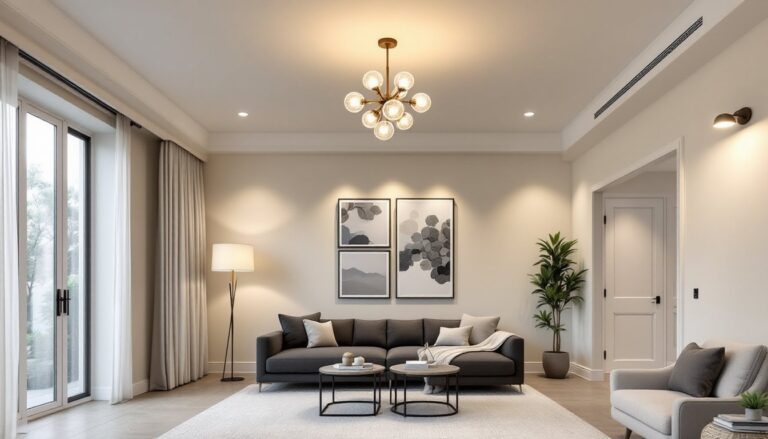
Start with your ambient layer: a flush-mount or semi-flush ceiling fixture that spreads general illumination. In kitchens under 100 square feet, a single 1500–2000 lumen LED fixture often suffices. For slightly larger spaces, consider two smaller fixtures spaced evenly.
Next, add task lighting at every work zone. Under-cabinet strips, pendants over islands or peninsula counters, and a dedicated light above the sink ensure you’re not dicing onions in your own shadow.
Finally, incorporate accent lighting to highlight design features. LED puck lights inside glass cabinets, toe-kick lighting along the floor, or a slim LED strip atop upper cabinets all push light into unused vertical space, making ceilings feel higher.
This strategy mirrors the same principles used in mobile home decorating, where maximizing vertical light distribution is key. Mix fixture types and aim for at least three separate light sources in any kitchen under 120 square feet.
Under-Cabinet Lighting to Brighten Countertops
Under-cabinet lighting is the single most effective task light upgrade for small kitchens. It eliminates the shadow your body casts when overhead lights are behind you, and it makes countertops, the primary work surface, safer and more functional.
Choose between LED tape lights (flexible, DIY-friendly, typically 12V or 24V), LED light bars (rigid, brighter, cleaner beam spread), or puck lights (circular fixtures spaced every 8–12 inches). LED tape is easiest for renters or quick installs: peel-and-stick backing, plug-in transformer, no hardwiring. Light bars offer better lumen output, look for 300–450 lumens per linear foot for solid task lighting.
Install fixtures toward the front edge of the cabinet base, not the back wall. This angles light onto the counter rather than the backsplash. Use an aluminum channel with a diffuser lens to eliminate LED hotspots and create an even wash.
Most under-cabinet kits run on low-voltage DC and can be hardwired into a wall switch or plugged into an outlet. If hardwiring, route cable through the cabinet interior and tie into an existing switch loop, no permit typically required for low-voltage lighting, but always verify local codes. If your kitchen has limited upper cabinets, the same fixtures work mounted under open shelving or even inside a shallow valance.
Pendant Lights That Add Style Without Taking Up Space
Pendants work in small kitchens when hung strategically. They deliver focused task light and visual interest without the footprint of a table lamp or floor fixture.
Hang mini pendants (6–10 inch diameter) over a peninsula, breakfast bar, or sink. Space them 24–30 inches apart and mount 30–36 inches above the counter surface. This keeps them out of sightlines while concentrating light exactly where it’s needed. Choose fixtures with clear or translucent shades rather than opaque metal, they’ll spread light rather than trapping it.
For ultra-compact kitchens, consider a single cone or dome pendant centered over the main prep area. Adjustable cord or rod-mount fixtures let you dial in the exact height.
Avoid oversized statement pendants. A 16-inch globe looks dramatic in a showroom but overwhelms a 60-square-foot kitchen. Stick with fixtures under 12 inches in diameter and look for designs that draw the eye upward, vertical cylinders, narrow cones, or geometric wire cages all work well.
Installation requires an existing junction box in the ceiling. If your kitchen lacks one where you want the pendant, hire a licensed electrician or install a swag kit that plugs into a wall outlet and drapes the cord to a ceiling hook (no box required). Swag kits are Code-compliant for non-permanent installations and ideal for renters. Many design enthusiasts on Apartment Therapy use this approach for rental-friendly upgrades.
Recessed Lighting for a Clean, Minimalist Look
Recessed cans (also called downlights or pot lights) sit flush with the ceiling, maximizing headroom and eliminating visual clutter, critical in kitchens with low ceilings or tight layouts.
Use 4-inch or 3-inch retrofit LED downlights rather than old-school 6-inch incandescent cans. Smaller apertures work better in compact spaces and modern LED retrofits produce 650–800 lumens per fixture, plenty for general and task lighting. Spacing should be roughly half the ceiling height: in an 8-foot ceiling kitchen, place cans every 4 feet.
Position fixtures 18–24 inches from walls and cabinets to wash vertical surfaces with light, making the room feel larger. Avoid centering a single can in the middle of the ceiling, it creates a spotlight effect and leaves edges dim. Instead, use a grid of three or four evenly spaced fixtures.
IC-rated cans are required if your ceiling is insulated (common in condos and upper-floor kitchens). Airtight (AT) rated fixtures are now mandated by many jurisdictions under updated energy codes, they prevent conditioned air from leaking into the attic. Check your local amendments to the IRC before buying.
Retrofit kits simplify installation: the LED module clips into the existing can’s socket, and trim springs snap into place. No need to remove drywall. New construction? Hire an electrician for layout and rough-in unless you’re comfortable working with romex and junction boxes. Most municipalities require a permit for new recessed lighting circuits.
Strategic Accent Lighting to Highlight Your Best Features
Accent lighting isn’t just decorative, it’s a tactical way to pull the eye away from cramped layouts and emphasize vertical space.
Above-cabinet lighting is a simple DIY win. Run LED rope light or tape light along the top of upper cabinets to wash the ceiling with soft indirect light. This raises perceived ceiling height and adds warmth without glare. Use a warm white (2700–3000K) for ambiance or match your task light color temp for consistency.
If you have glass-front cabinets or open shelving, install interior LED puck lights or battery-operated tap lights. They highlight dishware and decor while adding another light layer. Hardwired puck lights require drilling a small hole for cable: battery or plug-in versions are renter-friendly.
Toe-kick lighting, LED strips installed along the base of lower cabinets, creates a floating effect and guides movement at night. It’s especially useful if the kitchen doubles as a hallway or lacks a window. For visual inspiration and real-world examples, this curated lighting gallery showcasing accent techniques in compact kitchens.
Use accent lights on a separate switch or timer so they can be controlled independently from task and ambient layers. This flexibility is similar to what you’d find in a well-designed home office lighting plan, where different tasks demand different light levels.
Smart Bulbs and Dimmer Switches for Flexible Control
Dimmer switches and smart bulbs give you precise control over light levels and mood, letting one fixture serve multiple roles throughout the day.
Install dimmers on recessed cans, pendants, and any hardwired ambient fixtures. Use LED-compatible dimmers, older incandescent dimmers can cause LEDs to flicker or hum. Look for models rated for the total wattage of your fixtures: a typical small kitchen with four 10W LED downlights needs a dimmer rated for at least 40W LED load. Lutron and Leviton both make reliable residential-grade dimmers that fit standard single-gang boxes.
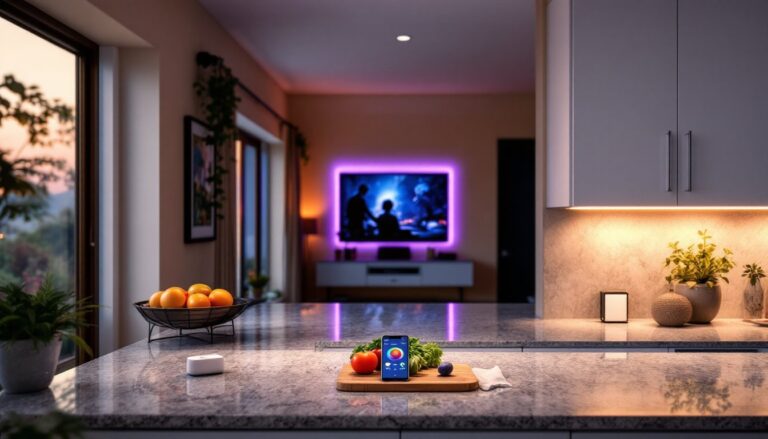
Smart bulbs (Philips Hue, LIFX, Wyze) offer dimming, color temperature adjustment, and scheduling via smartphone app. In a small kitchen, swap standard bulbs in pendant fixtures or under-cabinet puck lights with smart versions. Set cooler temps (4000K+) for morning prep and warmer tones (2700K) for evening ambiance. No rewiring required, just screw in the bulb and connect to your home Wi-Fi.
Motion sensors work well for under-cabinet or toe-kick lighting. Battery-powered PIR sensors or hardwired occupancy switches automatically light up work zones when you enter and shut off after a set delay, saving energy and avoiding the hunt for a switch with wet hands.
If you’re shopping for fixtures or bulbs, many homeowners find curated options at a local lighting showroom where staff can match dimmers to specific LED models. For budget-friendly picks, the Home Depot lighting department stocks a wide range of compatible dimmers, smart bulbs, and retrofit kits.