Choosing bathroom lighting isn’t just about flipping a switch, it’s about balancing function, style, and safe installation in a moisture-heavy environment. West Elm offers a range of fixtures that bring design-forward aesthetics to a space often stuck with builder-grade basics. Whether you’re updating a powder room or overhauling a primary bath, understanding which fixtures work for your layout, how to install them properly, and what sets West Elm apart from big-box options will save you time, money, and frustration. This guide walks through West Elm’s bathroom lighting collections, selection criteria, and installation realities so you can make informed decisions.
Table of Contents
ToggleKey Takeaways
- West Elm bathroom lighting offers design-forward mid-century and contemporary aesthetics at a mid-range price point ($100–$400), balancing quality finishes and unique styles between mass-market and boutique brands.
- Proper fixture sizing matters: vanity lights should span 60–75% of your mirror width and mount 65–70 inches from the floor for optimal face lighting and task visibility.
- Always verify damp vs. wet location ratings before purchasing; using a damp-rated fixture in a wet location violates electrical code and creates safety hazards.
- Standard E26 medium-base sockets on most West Elm fixtures allow flexibility with LED bulbs rated for damp locations in the 2700K–3000K color temperature range.
- Turn off power at the breaker and use a voltage tester before installation, secure fixtures to studs or rated mounting brackets, and consider hiring a licensed electrician if you’re uncomfortable with electrical wiring.
Why Choose West Elm for Your Bathroom Lighting?
West Elm sits in a sweet spot between mass-market home stores and high-end lighting showrooms. Their fixtures typically run $100–$400 per piece, which is higher than Home Depot Lighting options but lower than boutique brands. You’re paying for unique design details, brass finishes that actually look like brass, globe shades in hand-blown glass, and silhouettes you won’t see in every third bathroom on your block.
The brand leans heavily into mid-century and contemporary aesthetics, which means clean lines, geometric shapes, and materials like matte black steel, antique brass, and milk glass. If your taste runs traditional or farmhouse-heavy, West Elm’s catalog will feel limited. But for modern and transitional spaces, their fixtures integrate seamlessly.
Quality is generally solid for the price point. Expect metal housings rather than plastic, proper UL certification for damp or wet locations (critical in bathrooms), and standard electrical boxes that work with most residential rough-ins. Some users report finish wear over time, particularly on lacquered brass, so factor in long-term maintenance if you’re installing in a high-humidity bath without exhaust fans.
One practical advantage: West Elm’s fixtures often come with detailed installation specs and compatible bulb recommendations. Many use standard E26 medium-base sockets, so you’re not hunting for proprietary bulbs. Most vanity lights accommodate LED bulbs rated for damp locations, which matters when steam from a shower can condense on fixtures.
Popular West Elm Bathroom Lighting Styles and Collections
West Elm rotates collections seasonally, but several core styles remain consistent. Knowing which aesthetic matches your bathroom’s bones helps narrow choices quickly.
Mid-Century Modern and Contemporary Fixtures
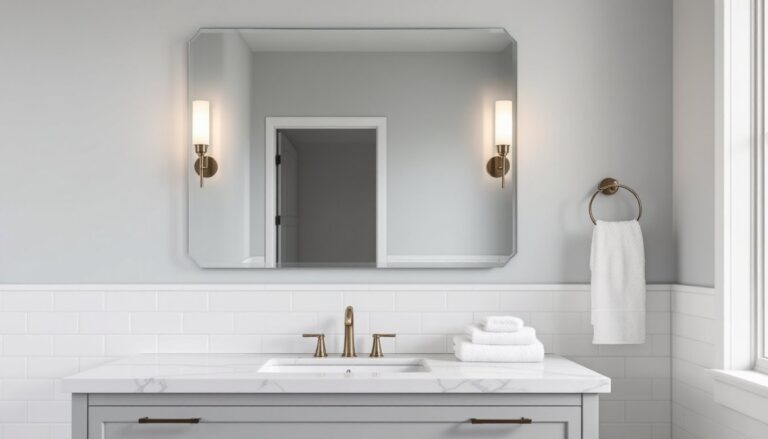
The Sculptural Glass Globe collection is a go-to for vanities. These sconces feature opal glass spheres mounted on brass or black steel arms, typically available in 1-light, 2-light, or 3-light configurations. A 3-light version spans roughly 24 inches wide, suitable for a 36- to 48-inch vanity. The globes diffuse light evenly, reducing harsh shadows, important for task lighting around mirrors.
Another popular line is the Contour Sconce, which pairs a cylindrical shade with a curved backplate. It’s a minimalist choice that works in tight spaces like powder rooms. According to Remodelista’s high/low comparison, the Contour Sconce offers similar visual impact to pricier designer alternatives at a fraction of the cost.
Wall-mounted Linear Bar Lights are practical for long double-vanity setups. These fixtures mount horizontally above a mirror, distributing light across a wider area than individual sconces. Look for bars rated at 15–20 watts per bulb if using LEDs: that typically delivers 1200–1600 lumens total, enough for grooming tasks without glare.
Industrial and Rustic Options
West Elm’s industrial fixtures lean on exposed bulbs, wire caging, and oil-rubbed bronze or matte black finishes. The Pipe Sconce series uses actual steel piping as the fixture arm, authenticity that appeals to loft-style or urban farmhouse bathrooms. These are heavier than contemporary sconces, so confirm your electrical box is anchored to a stud or blocking, not just drywall.
Rustic options include fixtures with seeded or clear glass shades and aged brass hardware. These pair well with reclaimed wood vanities or subway tile. Keep in mind that clear glass exposes the bulb fully: choose vintage-style LED filament bulbs for a cohesive look. Standard Edison-style LEDs draw 4–6 watts while mimicking the warm glow of incandescents.
For those curious about extending design continuity beyond the bathroom, West Elm also offers outdoor collections, though west elm outdoor lighting focuses more on patios and entryways than the wet-rated fixtures bathrooms demand.
How to Select the Right West Elm Lighting for Your Bathroom Size and Layout
Matching fixture scale to room dimensions prevents the “too small” or “too bulky” problem that plagues bathroom upgrades. Start by measuring your vanity width and mirror size. A common rule: vanity lights should span 60–75% of the mirror width for balanced illumination. For a 48-inch mirror, that’s roughly 29–36 inches of light coverage, achievable with a 3-light fixture or two sconces spaced evenly.
Mount sconces 65–70 inches from the floor to the center of the fixture for optimal face lighting. If installing flanking sconces on either side of a mirror, space them 30–36 inches apart center-to-center. This reduces shadows under the chin and nose, critical for makeup application or shaving.
For small powder rooms (under 40 square feet), a single sconce or compact 1-light fixture suffices. Oversized multi-light bars overwhelm tight spaces and waste wattage. In contrast, primary bathrooms (over 100 square feet) often benefit from layered lighting: vanity fixtures for tasks, a ceiling fixture or recessed cans for ambient light, and accent lights for niches or tub areas. Many homeowners find inspiration for layout planning on platforms like homify, which showcase real bathroom installations.
Consider ceiling height, too. Standard 8-foot ceilings pair well with flush or semi-flush mounts if adding overhead lighting. Vaulted or 10-foot+ ceilings can handle pendant lights or chandeliers, provided they’re rated for damp locations and mounted at least 7 feet above the floor to avoid head clearance issues.
Wattage needs vary by room size. Aim for 75–100 watts equivalent (in LED terms, 1000–1500 lumens) for a standard 50–75 square foot bathroom. Larger spaces may require 150+ watts equivalent across all fixtures. West Elm’s product pages list maximum wattage per socket: don’t exceed those ratings, or you risk overheating and voiding warranties.
Installation Tips and Considerations for West Elm Bathroom Fixtures
Before ordering, verify your existing electrical box location. West Elm vanity lights typically mount on standard 4-inch round or rectangular boxes, but some larger fixtures require a crossbar rated for the fixture’s weight. Check the product specs, fixtures over 5 pounds often need additional support.
Bathrooms are classified as damp or wet locations under the National Electrical Code (NEC). Damp-rated fixtures work for areas not directly exposed to water spray (above vanities, on walls away from showers). Wet-rated fixtures are required inside showers or directly above tubs. West Elm clearly labels location ratings: using a damp-rated fixture in a wet location is a code violation and safety hazard.
Turn off power at the breaker, not just the wall switch, before starting any work. Use a non-contact voltage tester to confirm wires are dead. Bathroom circuits often tie into GFCI-protected outlets: tripping the GFCI can make the fixture location seem dead even if the breaker is on.
Wiring is straightforward for most fixtures:
- Connect black (hot) to black, white (neutral) to white, and green or bare copper (ground) to the box ground wire using wire nuts rated for the wire gauge (typically 14 or 12 AWG).
- Tuck wires neatly into the box. Overstuffed boxes cause overheating and make it hard to seat the fixture flush.
- Secure the fixture to the mounting bracket using the provided screws. Don’t overtighten, this can crack glass shades or strip threads in metal backplates.
- Install bulbs and shades last to avoid breaking glass while handling the fixture.
If you’re replacing an old fixture with a different mounting footprint, you may need to patch and repaint the wall. Spackle, sand, and prime before painting to avoid visible repairs. For plaster walls common in older homes, use setting-type joint compound rather than lightweight spackle, it’s harder and less prone to cracking.
West Elm fixtures don’t always include bulbs. Buy LEDs rated for damp locations with a color temperature between 2700K and 3000K for warm, flattering light. Cooler temps (4000K+) render skin tones poorly, which is why commercial restrooms feel harsh.
Permits vary by jurisdiction. Many municipalities allow homeowners to replace existing fixtures without a permit, but installing new circuits or relocating boxes typically requires a permit and inspection. When in doubt, consult your local building department. Electrical work done without required permits can complicate home sales or insurance claims.
If your bathroom lacks proper ventilation, even the best fixtures will suffer. Run an exhaust fan rated for your bathroom’s cubic footage (CFM = room volume ÷ 7.5) during and after showers to reduce moisture buildup. This prolongs fixture finishes and prevents mold, which resources like The Spruce emphasize in their bathroom maintenance guides.
Finally, if you’re uncomfortable working with electrical wiring, hire a licensed electrician. Rates typically run $75–$150 per hour depending on region, and most vanity light swaps take under an hour for a pro. That’s cheaper than repairing fire damage or electrocution injuries from DIY mistakes.
Conclusion
West Elm’s bathroom lighting brings designer aesthetics to a DIY-friendly price range, provided you choose fixtures suited to your bathroom’s size, moisture exposure, and electrical setup. Prioritize proper location ratings, secure mounting, and safe wiring practices. Measure twice, cut once, and don’t skip the voltage tester. With the right fixture in place, your bathroom shifts from functional to finished, and you’ll have done it yourself.